
A simpler way to clear out a garage, spare room, or porch
A calm, practical plan for sorting clutter, spotting small repairs, and getting a hard-to-use space back.
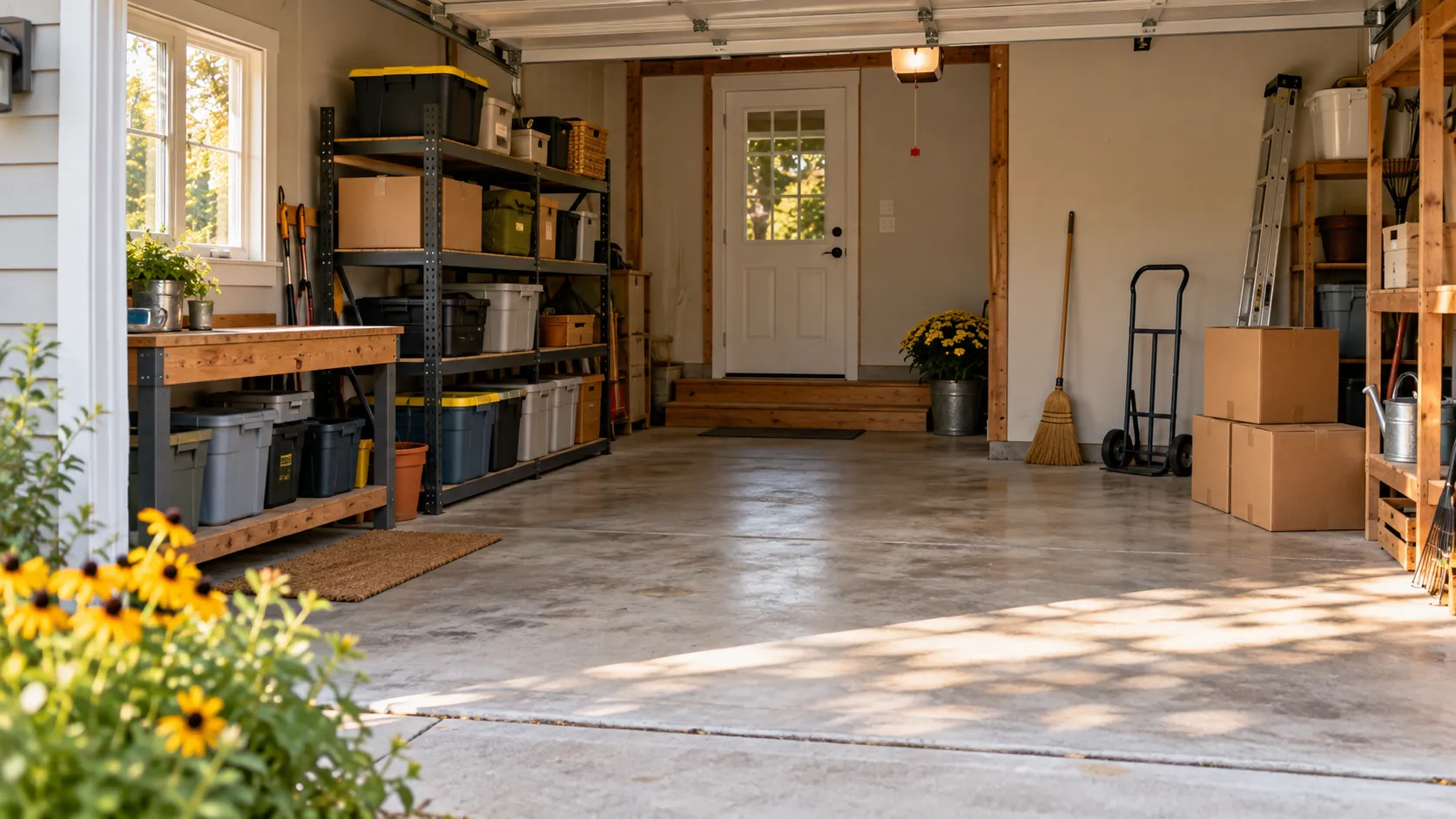
When a garage, spare room, porch, or storage area gets crowded, it can start to feel like a project that is too big to begin. Boxes stack up, items get moved from one corner to another, and eventually the space stops working for the things it was meant to do.
The good news is that you do not need a perfect weekend, a huge dumpster, or a major remodel to make progress. A little structure can turn an overwhelming cleanout into a series of small, useful decisions. The goal is not to make the space look like a showroom. It is to make it easier to walk through, store what matters, and use again.
Start with one clear zone
Trying to organize an entire garage or room at once is where most cleanouts stall. Pick one zone you can finish in a reasonable amount of time: the path from the door to the shelves, one wall of a spare room, the porch steps, or the floor space around a workbench.
Start by defining what that zone should do when you are finished. Maybe it needs to become a safe walkway, a place to park a vehicle, a spot for seasonal supplies, or simply a room that can be used again. That small decision gives every item a purpose: keep it in the space because it belongs there, move it somewhere more useful, or let it go.
It helps to take a quick wide photo before touching anything. It is not for social media. It is a practical record of where things started, and it can help if you need to describe the job or ask for help later.
Use four simple categories
As you work through a zone, make four temporary groups. They do not need fancy bins or labels. Open boxes, tote bags, or four spots on the floor can do the job.
- Keep here: items you use in this space and can reach safely.
- Keep elsewhere: items worth saving but better stored in another room, closet, or shelf.
- Donate or pass along: usable items that no longer fit your needs.
- Remove: broken, worn-out, or unwanted items that are ready to leave the property.
Make decisions quickly for the obvious items first. A broken chair that has been waiting for repair for years does not need a twenty-minute debate. The same is true for duplicates, empty containers, old packaging, and things that no one in the household recognizes or uses.
For the hard decisions, make a small “decide later” box and keep moving. The point is to restore the space, not get stuck reading every old paper or sorting every sentimental item in one afternoon.
Keep walkways and doors clear
The most useful result of a cleanout is often a clear path. In garages, porches, and entry areas, a blocked walkway is more than an inconvenience. It can make carrying groceries harder, create a tripping hazard, and make it difficult to get in or out quickly.
Aim for an open route from the door to the area you use most. Avoid storing heavy boxes above shoulder height or piling items in front of electrical panels, heating equipment, or exterior doors. If something is awkward, heavy, or difficult to move safely, do not try to force it alone. Getting help is usually faster and safer than risking an injury or damaged wall, door, or floor.
Once the path is open, the rest of the space becomes much easier to evaluate. You can see what storage is actually available instead of making decisions around piles.
Notice the small repairs hiding behind the clutter
Cleanouts often uncover the small repair jobs that have been easy to ignore. A shelf may be pulling away from the wall. A door may rub or fail to latch. A loose handrail, damaged piece of trim, worn weatherstripping, or drywall ding may have been hidden behind stored items.
Make a separate repair list as you go. Keep it specific and simple:
- Garage shelf needs secured.
- Porch screen door does not close smoothly.
- Closet door rubs at the top.
- Wall has a small hole behind stored boxes.
- Exterior trim needs a closer look.
Take one wide photo and one close-up of each issue. That makes it much easier to explain the scope of a job and helps avoid vague notes like “fix the garage.” If you notice signs of active water, significant rot, a structural concern, or a repair involving electrical or plumbing work, have the appropriate qualified professional assess it.
Make storage work for everyday life
Once you know what is staying, put the most-used items where they are easiest to reach. Seasonal decorations, extra paint, or once-a-year supplies can go higher or farther back. Tools, pet supplies, outdoor items, or cleaning equipment used every week should have a simple, accessible home.
You do not need to buy an entire storage system before beginning. Often, one sturdy shelf, a few bins, hooks in the right place, or a small repair to an existing cabinet is enough to make a space much more functional. Wait until you have cleared the floor and know what is actually staying before purchasing organizers.
Try to leave a little empty space on each shelf. A packed shelf may look efficient for one day, but it becomes hard to use when every item has to be pulled out to reach the next one. A bit of breathing room makes the space easier to keep up over time.
Plan the removal step before it becomes another pile
The “remove” group can quickly become its own clutter problem if there is no plan for it. Before moving a lot of material to the curb or driveway, decide what will happen next. Usable items may be donated or given away; household waste and special materials can have different local disposal requirements.
Keep questionable materials separate rather than mixing them into general bags or boxes. When you are unsure how something should be handled, check the relevant local guidance or ask the appropriate provider before disposing of it. This is especially important for products, electronics, or materials that need special handling.
If the job involves bulky furniture, a large collection of unwanted items, or a space that needs both clearing and minor repairs, it can be helpful to have one coordinated plan. That way, you are not left with a clean room and a new pile outside the door.
Take the pressure off the whole project
You do not have to finish every corner at once. A practical first win might be clearing the walkway, making room for one vehicle, or getting a spare room ready for guests. Those changes make everyday life easier right away and give you a better starting point for the next stage.
If you are not sure where to start, choose the space that causes the most daily frustration. The garage door that will not open fully, the porch you avoid using, or the room that no one can enter is often the right place to begin.
For homeowners in Great Bend and the surrounding areas, JACK can help with general repair, odd jobs, cleanup planning, and the small fixes that make a newly cleared space work better. Send a few photos and job details for a free estimate, or call JACK to talk through what you would like to tackle.