
Five small home projects that make everyday life easier
A practical look at the minor upgrades that make an entry, storage area, door, wall, or porch work better every day.
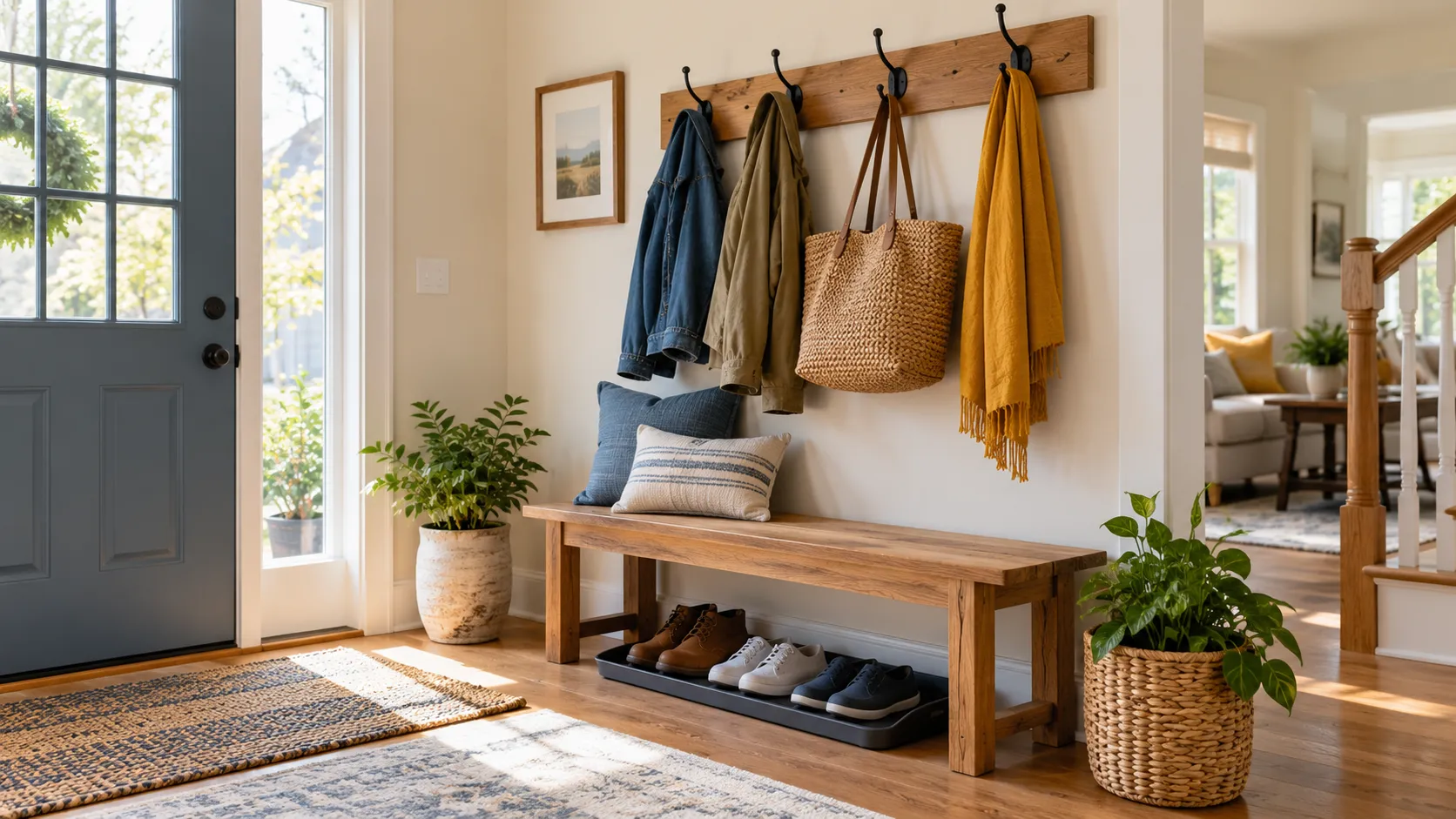
The projects that improve a home the most are not always the biggest ones. Often, they are the small changes you notice every time you come through the door, put something away, or try to use a room that almost works—but not quite.
Maybe coats and bags always end up on a chair. A closet shelf does not hold enough. A bedroom door rubs against the frame. A wall still has the small hole from moving furniture. None of those things require a major remodel, but together they can make daily routines more frustrating than they need to be.
Small home projects are a good opportunity to focus on function first. When a space is easier to enter, store things in, clean, or move through, it tends to stay more comfortable long after the work is done. Here are five useful places to start.
1. Give the entry a job to do
An entryway works hard. It catches shoes, coats, bags, mail, pet supplies, and the things people need on the way out the door. When it has no clear system, those items end up on the floor, the kitchen counter, or the nearest chair.
A few straightforward improvements can make an entry much more useful:
- Secure a row of hooks at an appropriate height for coats and bags.
- Add a sturdy bench for sitting down to put on shoes.
- Use a shallow shoe tray to keep dirt and moisture contained.
- Add a small shelf or basket for keys and mail.
- Adjust a door that rubs, sticks, or does not latch smoothly.
The right solution depends on the wall, the traffic through the space, and what needs to be stored. A simple hook rail is often more practical than a large piece of furniture, especially in a narrow hallway. Before mounting anything, consider what is behind the wall and how much weight the finished installation needs to hold.
2. Make storage easier to reach—and safer to use
When storage is difficult to use, clutter does not stay organized for long. A shelf that is too high, a closet rod that sags, or a cabinet that will not close turns a useful area into one more problem to work around.
Start by noticing what you reach for every week. Cleaning supplies, pantry items, pet supplies, tools, school bags, and seasonal gear all need a logical home. Frequently used items should be within easy reach; less-used items can move higher or farther back.
Adding or repairing a shelf can create a lot of useful space, but it needs to be properly supported for its intended load. A good installation considers the wall material, mounting points, bracket strength, and the weight of the items that will eventually sit on it. If a shelf is already pulling away, leaning, or sagging, clear it before adding more weight.
For a closet or utility area, even small improvements can help: a repaired door, a secure rod, a new shelf, hooks for tools, or a better place for bins. The goal is not to buy more organizers. It is to make the storage you already have work more reliably.
3. Fix the doors and hardware you use every day
Doors are easy to overlook because people adapt to small annoyances. You lift the handle to make the latch catch, push the door with your shoulder, or avoid using a closet because it sticks. Those workarounds add up.
Common door issues include loose hinges, worn hardware, a misaligned latch, a swollen or rubbing edge, damaged weatherstripping, or trim that has pulled away. In many cases, a careful adjustment or small repair can improve the way the door operates.
Pay attention to what the door is doing. Is it difficult to close only when the weather changes? Does it scrape in one spot? Does the handle feel loose? Does daylight show around the exterior frame? A wide photo of the full door and a close-up of the problem area can help explain the issue before any work starts.
If an exterior door will not lock, has visible water damage, or shows substantial movement around the frame, move it higher on the repair list. Security, water, and access are good reasons not to put a door repair off.
4. Take care of the small wall and paint touch-ups
Small drywall damage has a way of making an otherwise cared-for room feel unfinished. Nail holes, scuffs, a corner bump, or a patch from an old wall-mounted item may be minor, but fixing them can make a room feel noticeably cleaner.
The key is to treat the repair as more than simply covering a hole. A smooth result depends on preparing the damaged area, using the appropriate patching method, allowing material to dry, sanding carefully, and matching the finish as closely as possible. A larger or more damaged section may need a different approach than a small nail hole.
Before painting, look around the room for several small tasks that can be grouped together: loose trim, a damaged baseboard, worn caulk, a sticking cabinet door, or picture-hanging holes. Bundling related touch-ups into one project can be more efficient than handling each one separately.
Keep in mind that an exact paint match is not always possible when the original color has faded or the paint brand is unknown. If touch-ups are likely to show, painting a whole wall may give the cleanest result.
5. Improve the outdoor details people use first
The front steps, porch, railing, screen door, and exterior trim are some of the first parts of a home that family and visitors see. They are also exposed to daily use and changing weather.
Walk the path to the main entrance and look for loose hardware, a railing that moves, worn caulk, peeling paint, a damaged screen, or a door that no longer closes correctly. Check whether a welcome mat slides around or whether outdoor storage blocks a clear route to the entry.
These are often manageable maintenance items, but they matter because they affect safety, comfort, and curb appeal. A loose handrail or soft step should be evaluated before it becomes a bigger concern. For work involving significant structural damage, roof work, or anything that requires a licensed trade or permit, the appropriate qualified professional should be involved.
Make a short list instead of waiting for a perfect time
It is tempting to wait until there is enough time to tackle everything. In reality, the best first step is usually a short list of two or three items that will make daily life easier right away. A repaired door, secure shelf, cleared entry, or small wall repair can make a home feel more settled without turning into a major project.
If you are gathering ideas, walk through your home with your phone and take photos of the places that slow you down. Add a quick note about what you want to change: “install hooks by entry,” “repair closet shelf,” or “patch wall after removing TV.” Clear details and photos make the next conversation much easier.
For homeowners in Great Bend and the surrounding areas, JACK can help with general repair, odd jobs, and the practical projects that make a home work better. Send the job details and photos for a free estimate, or call JACK to discuss your list.