
What your exterior door is trying to tell you
Drafts, sticking, water marks, and loose hardware point to different fixes. Here is what to check first.
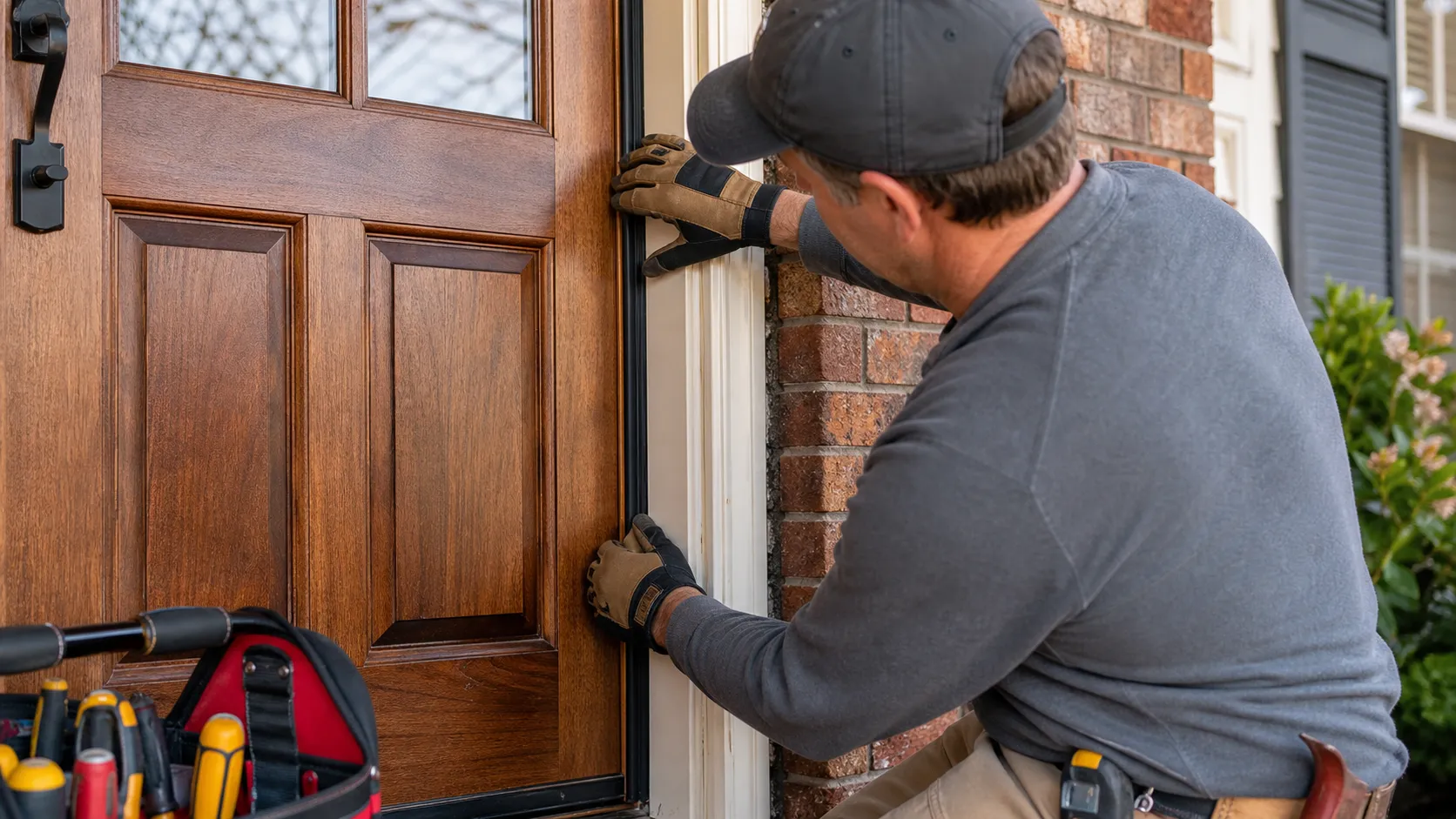
A door rarely fails all at once. It usually starts with a draft, a latch that needs an extra push, or a dark mark near the threshold. Those small clues help narrow down the right repair. Paying attention early can keep a straightforward adjustment from becoming a damaged jamb, wet flooring, or an avoidable replacement.
Take a few minutes to observe the door in normal use. Does it bind only in humid weather? Is the draft strongest along one side? Does water appear after a wind-driven rain, or is there simply old discoloration? The pattern matters. A door is a system of hinges, slab, frame, sill, weatherstripping, threshold, lockset, and exterior trim; the visible symptom is not always where the cause began.
Start with the simple checks
Open and close the door slowly. Look for an even gap around the slab, listen for rubbing, and check whether the latch meets the strike plate without lifting or pushing the door.
- Tighten loose hinge screws.
- Inspect weatherstripping for flattened or missing sections.
- Look for daylight around the frame.
- Check the sill and lower corners for moisture.
Then look at the door from outside. Is the top edge square with the frame? Is the sweep still touching the threshold? Are the exterior caulk lines intact where the frame meets siding or trim? A quick photo taken straight on can help make uneven gaps or shifted trim easier to see.
What common signs can mean
A draft around the edges often points to worn weatherstripping, a flattened door sweep, or a door that is no longer sitting evenly in the frame. Replacing a missing seal may help, but the seal will not last if loose hinges or a sagging slab are left uncorrected.
A latch that will not catch without force can be a simple strike-plate alignment issue. Seasonal movement, settling, or hinge wear can shift the door just enough to make the latch hit too high or too low. Do not force the handle repeatedly; that can wear the latch and damage the surrounding hardware.
Rubbing at the top or along the latch side may indicate loose screws, worn hinges, swelling from moisture, or a frame that has moved. Note where the rubbing happens before sanding or trimming anything. Removing material from the slab without identifying the cause can make the fit worse later.
Water marks near the threshold deserve prompt attention. They may come from a failed sweep, damaged sill pan, open exterior joints, missing caulk, or water being directed toward the opening. Look for soft wood, peeling paint, swollen trim, or a musty smell in the nearby flooring.
Loose handles or deadbolts are often a small repair, but they also affect security and proper latching. Check that the door closes freely before tightening or replacing hardware. A lock that is being used to pull a misaligned door into place will wear out sooner.
Test the door in different conditions
Some door problems are seasonal. Wood can expand with humidity, while cold weather makes drafts much more noticeable. Make a note of when the issue occurs and whether it changes after rain or a sharp temperature change. That information helps distinguish a minor adjustment from a moisture issue that needs a closer look.
At night, turn on the interior light and look around the closed door from outside. A small amount of visible light at the bottom can be normal depending on the threshold, but large or uneven gaps around the sides and top usually mean the seals or alignment need attention. Do not use an open flame to test for air movement; a simple tissue or your hand near the gap is safer.
A sensible repair order
Start with the least invasive fix and check the result before moving on.
- Tighten hardware and hinge screws with the door supported and closed as needed.
- Confirm the slab is hanging square and the latch is lining up with the strike plate.
- Replace worn weatherstripping, sweeps, or threshold seals with products that match the opening.
- Repair exterior caulk, trim, or paint only after the source of water is addressed.
- Check the operation again from both sides of the door.
Small changes can work together. A correctly adjusted strike plate, refreshed weatherstripping, and a sweep that reaches the threshold may restore comfort without replacing the entire door.
Keep the exterior opening protected
The door opening needs maintenance beyond the door slab itself. Inspect the condition of the exterior trim, flashing, siding or masonry joints, and the path water takes across the porch or stoop. Leaves, soil, planters, and loose mats can hold moisture against the threshold. Keeping that area clean makes it easier to spot a new problem.
If there is a storm door, inspect its closer, hinges, latch, and bottom sweep too. A storm door that slams or does not close completely can put extra stress on the main door and leave the opening less protected in bad weather.
Repair or replace?
Alignment, hardware, and weatherstripping problems are often repairable. A badly warped slab, soft framing, failed glass, or recurring water intrusion may make replacement the better value. Replacement should also include an assessment of the opening behind the trim; a new door cannot solve deteriorated framing or an unresolved drainage problem by itself.
The opening matters as much as the door itself. A good repair solves the reason the problem started—not only the visible symptom. If you are unsure where a door problem begins, take photos of the gaps, threshold, and exterior trim. JACK the Handyman can help with common repairs, adjustments, weatherstripping, hardware, and finish details in Great Bend and surrounding areas, and can help identify when a specialized trade is needed.